

This post was originally published in August 2023. It was last updated in August 2026.
What makes an incentive trip genuinely motivating?
It is not simply the destination, the hotel or the activities. The most effective incentive travel programs are designed around the people taking part: what they value, how they want to spend their time, who they want to share the experience with and, increasingly, how meaningful the experience feels.
That distinction matters. An incentive trip may look impressive on paper and still miss the mark if participants feel overscheduled, disconnected from the destination or simply presented with an itinerary that could have been created for any group.
The latest research confirms just how powerful incentive travel can be when the experience is designed well. According to the Incentive Research Foundation’s 2025 European Attendee Preferences for Incentive Travel study, 97% of European employees surveyed said group incentive travel was motivating, with 55% describing it as extremely motivating.
So how do you turn an incentive trip from a reward into something people genuinely want to earn — and remember afterwards?
Here are five principles worth building into your next incentive travel programme.
The power of incentive travel
Incentive travel occupies an interesting space in employee reward and recognition. Unlike a cash bonus or physical reward, travel combines anticipation, recognition and experience, and often gives participants access to places and activities they might not otherwise experience in the same way.
The motivational appeal remains remarkably strong.
The Incentive Research Foundation’s first study dedicated specifically to European incentive travel preferences surveyed 600 employees across Central, Eastern and Southern Europe and the UK and Ireland. It found that 97% were motivated by the prospect of a group incentive travel experience. Almost all respondents saw at least some value in incentive travel, while more than three-quarters said it offered “a great deal of value”.
But perhaps the more useful finding for event planners is that the research goes beyond confirming that incentive travel works. It shows that how an incentive trip is designed matters enormously.
Participants want a balance of shared and individual experiences. They value time to disconnect. They want authentic encounters with a destination rather than generic tourism. They appreciate comfort, flexibility and the opportunity to share the reward with someone important to them.
In other words, an incentive trip should not simply be full. It should be thoughtfully designed.
Top 5 tips
1. Understand What Will Motivate Your Participants
There is no universally perfect incentive trip.
Before choosing a destination or building an itinerary, understand the people you are designing the experience for. Their age, interests, previous travel experiences, cultural background, accessibility requirements and personal circumstances can all influence what they consider rewarding.
That does not mean asking everyone to design their own itinerary. A short pre-program survey, conversations with the client or analysis of previous incentive programs can reveal valuable patterns.
Ask questions such as:
- What kinds of experiences would participants be unlikely to arrange for themselves?
- Do they value relaxation, culture, adventure or a combination?
- How widely travelled is the group?
- Would bringing a partner or guest significantly increase the perceived value of the reward?
- Are there dietary, accessibility, cultural or religious considerations that should influence program design?
The answers can be surprisingly important.
According to the IRF’s 2025 European research, 83% of respondents considered being able to bring a guest an important feature of an incentive experience, while 78% valued luxury accommodation.
Destination preferences are more nuanced than simply choosing somewhere sunny, too. Beach and sunshine ranked highly among European respondents, but so did cultural experiences, historic locations and adventure. Western Europe was the most highly motivating geographical region in the study, selected among the top choices by 48% of respondents.
The lesson for incentive planners is not that every program should head for the beach. It is that the right incentive destination is the one that matches the motivations of the people earning the trip.
A successful program starts with the audience, not the map.
2. Build in Flexibility, Downtime and Space to Experience the Destination
One of the easiest mistakes to make when planning an incentive trip is trying to fill every available hour.
When a company is investing significantly in bringing people to a destination, there is an understandable temptation to maximise the itinerary: breakfast, activity, lunch, another activity, drinks, dinner, entertainment — then start again the following morning.
More does not necessarily mean better.
In the IRF’s European study, 80% of respondents considered free time for relaxation an essential feature of an incentive trip. Previous IRF research has consistently found the same preference: participants want time to disconnect and enjoy the destination on their own terms.
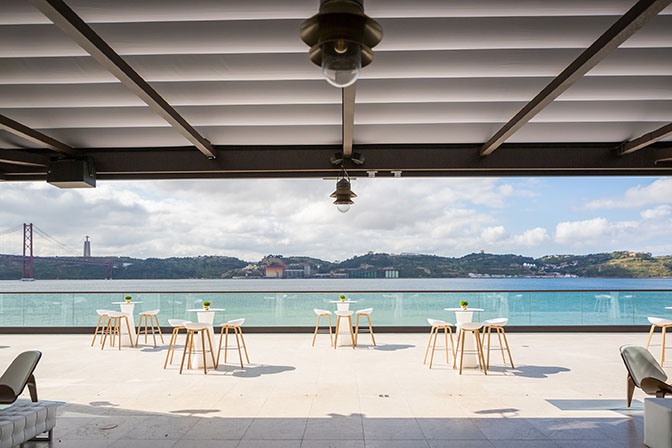
That could mean a free afternoon by the pool in Mallorca, time to wander through Lisbon, an unhurried morning in the Tuscan countryside or simply the option to skip an activity and recharge.
But program design is evolving again.
The IRF 2026 Trends Report suggests that simply inserting blocks marked “free time” into an itinerary is no longer always enough. With budgets under pressure and participant expectations increasing, planners are looking at what the IRF describes as smaller “micro-moments” that add value without creating another compulsory activity.
Think a local host appearing for an informal conversation, a drop-in artisan workshop, a tasting people can join when they choose, or a quiet wellness moment built naturally into the program.
The principle is simple: give participants choice without making them responsible for creating the experience themselves.
The best incentive itineraries have rhythm. There are moments when everyone comes together, moments of surprise and energy, and moments when nothing is demanded of the participant.
That space is not wasted program time. It is part of the experience.
Read more about incentive travel in our latest blog “DMC Insider’s Guide: What Makes a Great Incentive Travel Program?”
3. Create Experiences They Couldn't Simply Book Themselves
“Authentic” and “unique” are two of the most overused words in travel. Yet the idea behind them remains important.
If an incentive winner can find exactly the same experience through a ten-minute online search, what makes it feel like a reward?
A strong incentive program should offer a different relationship with the destination. That might mean entering a venue normally closed to the public, meeting the people behind a local craft or tradition, dining somewhere unexpected, exploring a neighbourhood through someone who lives there, or gaining access to an experience that depends on trusted local relationships rather than an online booking platform.
This is where local destination knowledge becomes particularly valuable.
Rather than asking, “What can we do in this city?”, start with a different question:
“What can this group experience here that they could not experience in quite the same way anywhere else?”
The answer does not always have to be extravagant.
A private sailing experience may be right for one group. For another, meeting a family of producers who have worked the same land for generations may create a far stronger memory. A dinner in an unexpected architectural space, access to a historic property after hours, or working alongside a local artisan can become the moment people talk about long after returning home.
Exclusivity in incentive travel is not necessarily about price. Increasingly, it is about access, place and connection.
And there is another benefit to designing experiences this way: working with local businesses, producers, guides and communities allows more of the value generated by an incentive program to remain within the destination itself.
4. Create Connection Without Forcing “Team Building”
Incentive trips naturally bring people together outside their usual working environment. That creates an opportunity to strengthen relationships, but it does not mean every program needs a traditional team-building exercise.
In fact, forcing participants through an activity purely because it has been labelled “team building” can work against the very connection you are trying to create.
Think instead about designing for interaction: a shared table, a collaborative cooking experience, a relaxed boat journey, a local challenge or simply enough time over dinner for conversations to develop can create stronger connections than a heavily facilitated exercise.
This becomes particularly relevant for organisations with distributed, international or hybrid teams. People who regularly interact through screens may know each other professionally but have had relatively little opportunity to spend meaningful time together.
An incentive trip creates a different environment.
Hierarchies can soften. Colleagues from different offices or departments meet properly for the first time. Conversations continue beyond a scheduled meeting. People discover common interests that have nothing to do with their job titles.
That does not happen automatically, however. Consider the composition of the group when designing activities and seating arrangements. Avoid creating a program where participants remain with the colleagues they already know throughout the trip. Mix structured moments with informal ones and create opportunities for people to connect naturally.
The goal is not to manufacture teamwork. It is to create the conditions in which relationships can actually develop.

5. Make Recognition Meaningful, Not Merely Ceremonial
Recognition is often the emotional centre of an incentive program. For some organisations, that culminates in an awards ceremony or gala dinner. For others, recognition may happen more subtly throughout the trip.
Either way, it should feel personal.
A generic stage moment, standard trophy and round of applause may recognise an achievement, but it does not necessarily communicate why that achievement mattered.
If an awards ceremony forms part of the program, use it to tell the story behind the recognition. What did the individual or team achieve? What changed because of their contribution? What obstacles did they overcome?
Personalised video, messages from colleagues or leadership, carefully chosen gifts and storytelling can make recognition significantly more meaningful.
And consider the setting.
A recognition dinner does not automatically require a hotel ballroom. The destination itself can become part of the occasion: a historic palazzo in Italy, a vineyard in Portugal, an unexpected industrial space in Spain, a château in France or a distinctive London venue can transform the final evening into a genuine culmination of the journey.
The objective is not simply to make the ceremony bigger. It is to make the recognition feel deserved, relevant and memorable.
What Makes an Incentive Trip Successful in 2027?
The evidence increasingly points in the same direction: successful incentive travel is becoming more personal, flexible and experience-led.
For European participants in particular, recent IRF research highlights the importance of relaxation, high-quality accommodation, culturally immersive experiences and the ability to share the experience with a guest. Sustainability is also influencing perceptions: nearly half of respondents in the 2025 European study said sustainability measures affected how they viewed an incentive travel program.
At the same time, planners are operating in a more complex environment.
The IRF’s 2026 Trends Report identifies rising costs, geopolitical uncertainty and changing participant expectations among the forces shaping incentive travel. According to the report, organisations are responding through more strategic program design, including choosing destinations closer to participants and reconsidering program length.
That makes destination expertise increasingly important.
The question is no longer simply how much can be fitted into an incentive itinerary. It is which elements will create enough value to deserve their place in it.
Planning an Incentive Trip in Europe?
TERRAEVENTS designs and delivers tailor-made incentive travel programs and corporate events across Italy, Spain, Portugal, France and the UK.
With teams on the ground and deep local destination knowledge, we work with event planners and companies to create programs that combine seamless logistics with experiences rooted in the places participants are visiting, from established incentive destinations to places they may never have considered.
Because the goal is not simply to take a group somewhere extraordinary. It is to give them a reason to remember being there.
So, planning your next incentive trip? Contact TERRAEVENTS and start designing the experience.
